
Read in the previous article how and how much people earn on profitable websites.
Today we’ll look at two parameters: the site’s topic and its audience. These parameters are closely tied to each other and affect profitability.
The goal of a profitable website is to get traffic and convert it into income. To convert traffic at a higher price, it has to be quality traffic.
As we go through the niches, picture the user who will be using the site. Build a site not only for the income, but to give users what they’re looking for, and only then monetize it. Follow this approach and you won’t have problems with promotion and monetization.
The first step in creating a profitable website is choosing a niche, a topic. This is the stage that all further strategies and stages of the project are built on.
Competition and profitability
Two interconnected factors: the more competitive the niche, the higher the ad prices, but there are exceptions. Income depends directly on the niche. Different niches mean different ad click prices. And the more competitive it is, the harder it is to get to the top of the search results.
Required level of expertise
Pick a topic you understand, whether you plan to write the texts yourself or hire copywriters. It’s hard to find a copywriter who knows the details of your topic, and you need to be able to tell what quality of content the copywriters are producing. If you have no expertise in the chosen niche, you have to be ready to figure it out.
Size
In the context of profitable websites, this is how many articles you can write to cover all aspects of the topic. Pick a big niche and it will be hard to promote in search engines. Pick one that’s too narrow and you’ll have fewer article topics to choose from, so you’ll have to expand into related topics or build another site.
Broad niches
Examples of broad niches: construction, food, vacations
Narrow niches
Examples of narrow niches: building timber country houses, alkaline foods, vacations in Montenegro
Popularity, potential traffic volume
Besides the size of the niche, estimate the volume of traffic. For example, you can write a lot of articles about hydrogeology, but you won’t get much traffic, because the topic isn’t popular.
Seasonality
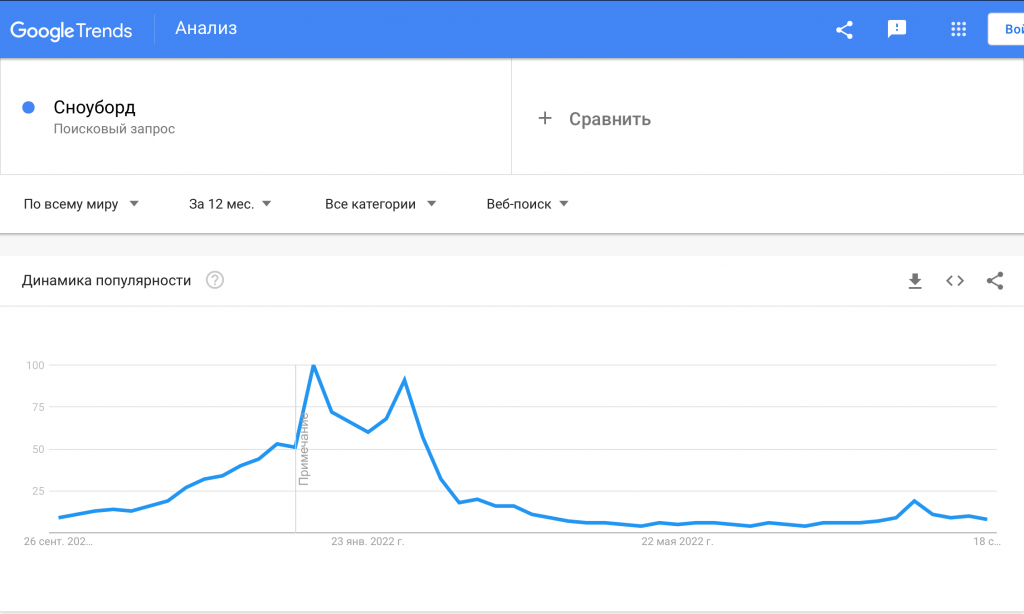
Some topics have seasonality: skiing will be popular from November to March, and for the other 7 months you won’t get traffic on that topic. Take this into account and choose niches with weak seasonality, or combine niches with different seasons to cover the seasonal dips.
You can check seasonality in Google Trends
Commercial potential
Sites with a commercial component monetize better, and most sites are like that: even on a site about knitting or cooking you can sell related books and items.
Examples of sites without a commercial component: wiki sites (encyclopedias, sites about ancient animals, history, jokes, news media). These sites are harder to monetize.
Think about what, in theory, you could sell in the articles on your site. It’s better if those products are expensive.
Conclusion
Most likely you already have a few ideas for a site niche in your head. Write them down and use the tools to check how popular they are.
Look at existing projects on these topics and analyze them.
With the theory from this article in mind, move on to the second, practical part!